Answer: Why interspecific hybrids often fail due to imbalanced maternal:paternal genomic contributions to endosperm (2m:1p required), controlled by imprinted genes.
- A Endosperm size alone, with little reference to underlying hybrid genetic compatibility between species involved in general practice as frequently described
- B Why interspecific hybrids often fail due to imbalanced maternal:paternal genomic contributions to endosperm (2m:1p required), controlled by imprinted genes
- C How starch granules are synthesized and subsequently packaged within the developing endosperm tissue structure itself in most textbook accounts during normal conditions
- D Embryo dormancy mechanisms that are triggered largely independently of any underlying endosperm genetic factor present as generally observed in typical laboratory settings
Correct answer: B. Why interspecific hybrids often fail due to imbalanced maternal:paternal genomic contributions to endosperm (2m:1p required), controlled by imprinted genes
Explanation: EBN (Endosperm Balance Number, Johnston): endosperm requires 2 maternal:1 paternal genome contributions (2:1 ratio). Imprinted genes in endosperm control this. Wrong ratio causes endosperm failure and hybrid inviability.
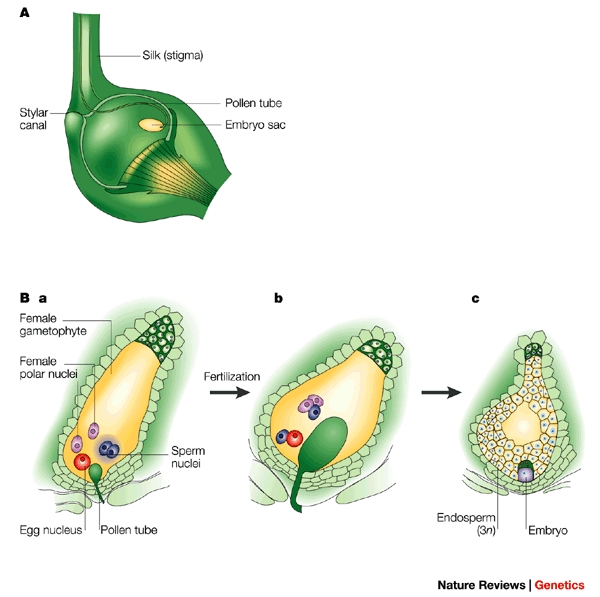
Double fertilisation in angiosperms: one male gamete fuses with the egg to form the diploid zygote (syngamy), while the second fuses with the two polar nuclei to form the triploid primary endosperm nucleus (triple fusion). Image: Triploid, CC BY 3.0, via Wikimedia Commons.
Concept context
Flower structure, pollination, double fertilization, and seed/fruit development - the highest-scoring Class 12 biology chapter in NEET.
Read the full Sexual Reproduction in Flowering Plants notes →