Answer: One (single cotyledon called scutellum in grasses).
- A None, since monocot embryos lack cotyledon tissue entirely
- B One (single cotyledon called scutellum in grasses)
- C Two cotyledons fused together along the embryonic axis
- D Three to four cotyledons arranged around the plumule
Correct answer: B. One (single cotyledon called scutellum in grasses)
Explanation: Monocots: one cotyledon (seed leaf). In grasses, it is the scutellum that absorbs nutrients from endosperm. Dicots have two cotyledons. This is a fundamental angiosperm classification.
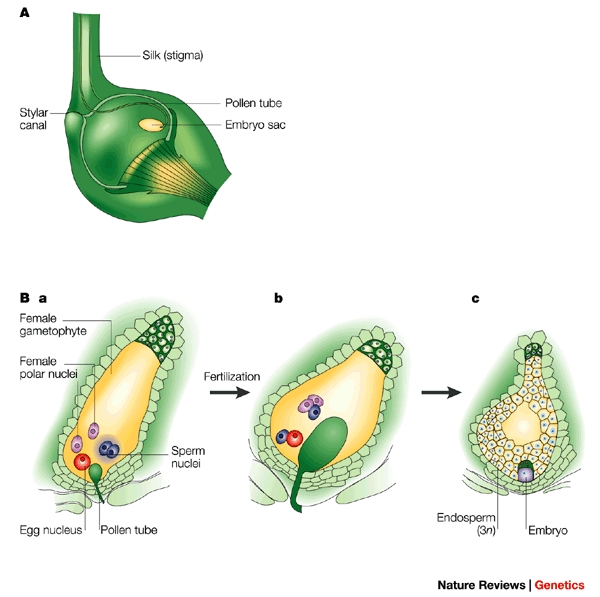
Double fertilisation in angiosperms: one male gamete fuses with the egg to form the diploid zygote (syngamy), while the second fuses with the two polar nuclei to form the triploid primary endosperm nucleus (triple fusion). Image: Triploid, CC BY 3.0, via Wikimedia Commons.
Concept context
Flower structure, pollination, double fertilization, and seed/fruit development - the highest-scoring Class 12 biology chapter in NEET.
Read the full Sexual Reproduction in Flowering Plants notes →