Answer: Diploid sporophyte and haploid gametophyte generations alternate in the life cycle.
- A Plants simply alternate between summer and winter growth phases each year
- B Diploid sporophyte and haploid gametophyte generations alternate in the life cycle
- C Plants alternate between sexual and asexual reproduction depending on the season
- D Different plant species gradually alternate dominance within a single ecosystem
Correct answer: B. Diploid sporophyte and haploid gametophyte generations alternate in the life cycle
Explanation: Alternation of generations: diploid sporophyte (2n) produces haploid spores by meiosis. Spores germinate into haploid gametophyte (n) that produces gametes. Fertilization restores diploid sporophyte.
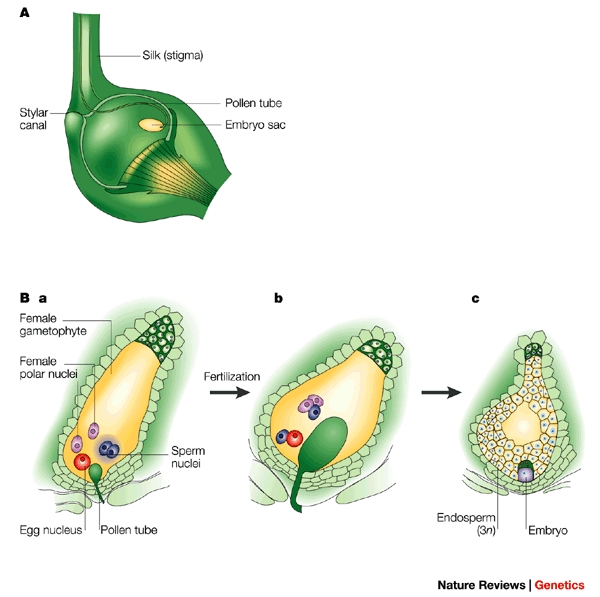
Double fertilisation in angiosperms: one male gamete fuses with the egg to form the diploid zygote (syngamy), while the second fuses with the two polar nuclei to form the triploid primary endosperm nucleus (triple fusion). Image: Triploid, CC BY 3.0, via Wikimedia Commons.
Concept context
Flower structure, pollination, double fertilization, and seed/fruit development - the highest-scoring Class 12 biology chapter in NEET.
Read the full Sexual Reproduction in Flowering Plants notes →