Answer: Molecular recognition between pollen and pistil S-gene products rejecting same-genotype pollen.
- A Physical separation of stamens and pistil onto entirely different flowers altogether
- B Molecular recognition between pollen and pistil S-gene products rejecting same-genotype pollen
- C Releasing volatile insect repellents that actively prevent pollinator visits to the flower
- D Producing no functional pollen grains whatsoever throughout anther development
Correct answer: B. Molecular recognition between pollen and pistil S-gene products rejecting same-genotype pollen
Explanation: SI: stigma or pistil cells express S-gene products that recognize matching pollen S-alleles. If pistil and pollen share S alleles, pollen tube growth is inhibited, preventing inbreeding.
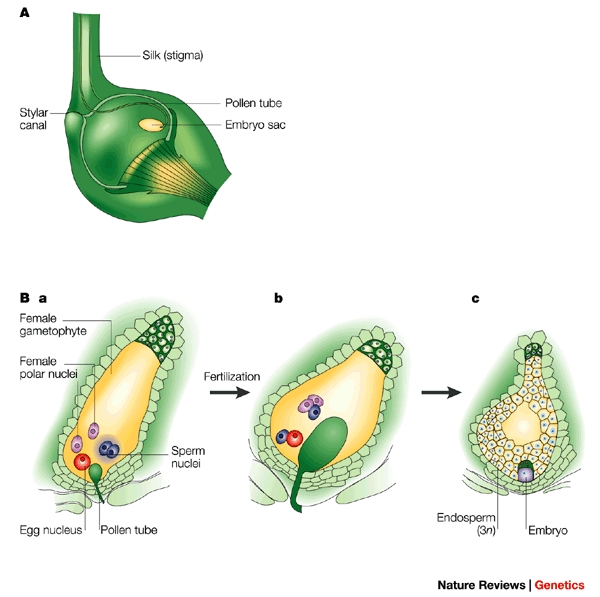
Double fertilisation in angiosperms: one male gamete fuses with the egg to form the diploid zygote (syngamy), while the second fuses with the two polar nuclei to form the triploid primary endosperm nucleus (triple fusion). Image: Triploid, CC BY 3.0, via Wikimedia Commons.
Concept context
Flower structure, pollination, double fertilization, and seed/fruit development - the highest-scoring Class 12 biology chapter in NEET.
Read the full Sexual Reproduction in Flowering Plants notes →