Answer: Synergid cells sending signals to block subsequent pollen tube entry after the first tube enters and bursts.
- A A simple physical size restriction at the narrow micropyle opening that permits only one pollen tube through at a time
- B Synergid cells sending signals to block subsequent pollen tube entry after the first tube enters and bursts
- C The developing endosperm tissue actively repelling any additional pollen tubes immediately after fertilization occurs
- D Specialized anti-pollen enzymes that are secreted directly by the egg cell cytoplasm itself before fertilization
Correct answer: B. Synergid cells sending signals to block subsequent pollen tube entry after the first tube enters and bursts
Explanation: After first pollen tube enters synergid and bursts, the unfused synergid sends a rapid signal preventing other pollen tubes from entering. Mechanism involves changes in synergid and central cell signaling.
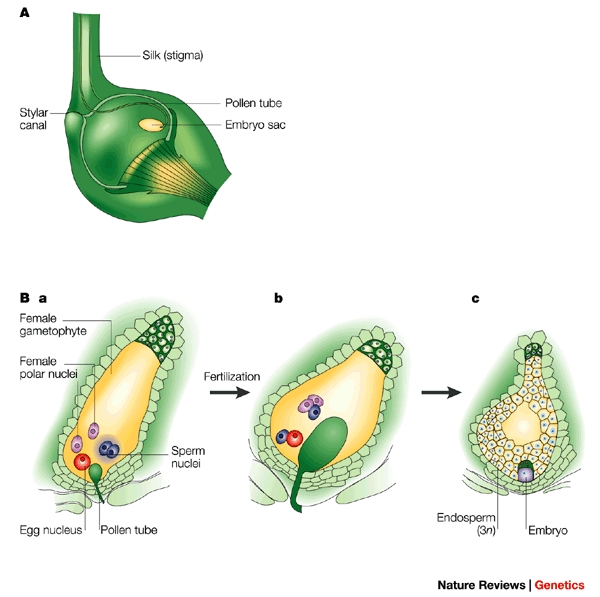
Double fertilisation in angiosperms: one male gamete fuses with the egg to form the diploid zygote (syngamy), while the second fuses with the two polar nuclei to form the triploid primary endosperm nucleus (triple fusion). Image: Triploid, CC BY 3.0, via Wikimedia Commons.
Concept context
Flower structure, pollination, double fertilization, and seed/fruit development - the highest-scoring Class 12 biology chapter in NEET.
Read the full Sexual Reproduction in Flowering Plants notes →