Answer: Animals transfer pollen precisely between same species with high efficiency (compared to wind), especially via directed foraging behavior.
- A Animals actively consume and eliminate competing plant species growing nearby the flower over time under usual circumstances according to most researchers
- B Animals transfer pollen precisely between same species with high efficiency (compared to wind), especially via directed foraging behavior
- C Animals physically damage flowers during visits, which is sometimes thought to trigger a burst of pollen release in the majority of cases studied
- D Animals supply nitrogen-rich nutrients directly into the flower tissue during each visitation event as widely reported in standard practice
Correct answer: B. Animals transfer pollen precisely between same species with high efficiency (compared to wind), especially via directed foraging behavior
Explanation: Zoophily: animals (bees, birds, bats) transfer pollen efficiently between same-species flowers. Flowers evolved attractive traits (color, scent, nectar) to reward and ensure reliable pollination.
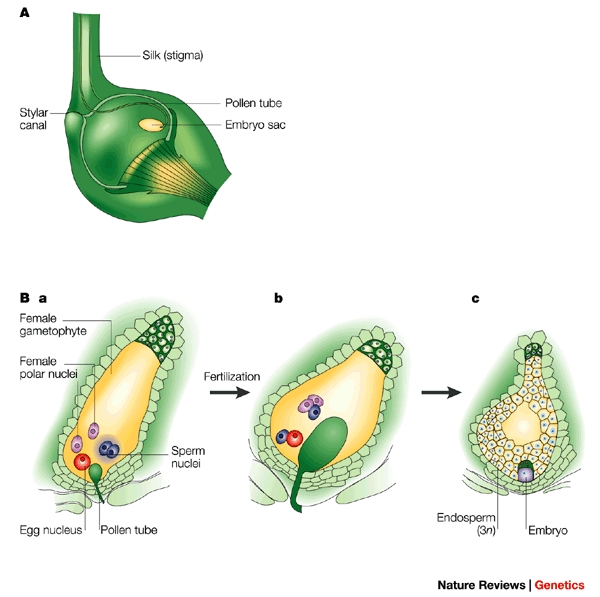
Double fertilisation in angiosperms: one male gamete fuses with the egg to form the diploid zygote (syngamy), while the second fuses with the two polar nuclei to form the triploid primary endosperm nucleus (triple fusion). Image: Triploid, CC BY 3.0, via Wikimedia Commons.
Concept context
Flower structure, pollination, double fertilization, and seed/fruit development - the highest-scoring Class 12 biology chapter in NEET.
Read the full Sexual Reproduction in Flowering Plants notes →