Answer: A small apical cell (embryo proper) and large basal cell (suspensor that attaches to seed coat and nourishes embryo).
- A Two genetically identical daughter cells of exactly equal size and identical developmental fate each time in routine practice
- B A small apical cell (embryo proper) and large basal cell (suspensor that attaches to seed coat and nourishes embryo)
- C Endosperm tissue directly, largely bypassing the usual formation of the embryo proper itself overall in most cases
- D A largely formed multicellular embryo supposedly produced within just a single cell division event under typical conditions
Correct answer: B. A small apical cell (embryo proper) and large basal cell (suspensor that attaches to seed coat and nourishes embryo)
Explanation: Zygote first division: asymmetric. Small apical cell → embryo proper (shoot/root meristems, cotyledons). Large basal cell → suspensor (anchors embryo, delivers nutrients).
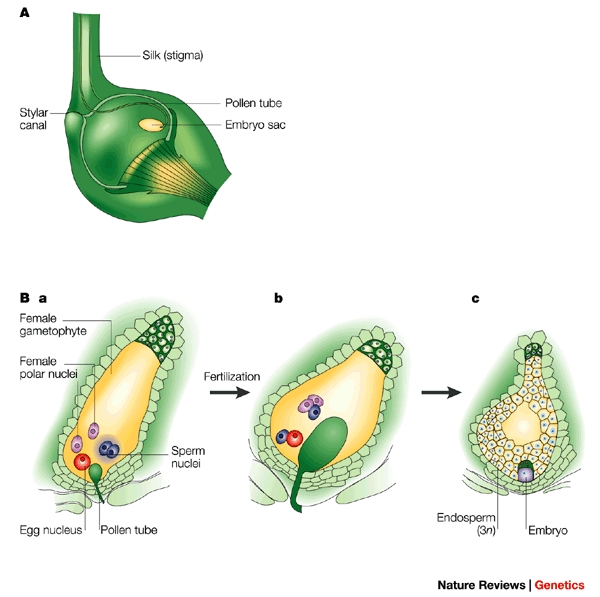
Double fertilisation in angiosperms: one male gamete fuses with the egg to form the diploid zygote (syngamy), while the second fuses with the two polar nuclei to form the triploid primary endosperm nucleus (triple fusion). Image: Triploid, CC BY 3.0, via Wikimedia Commons.
Concept context
Flower structure, pollination, double fertilization, and seed/fruit development - the highest-scoring Class 12 biology chapter in NEET.
Read the full Sexual Reproduction in Flowering Plants notes →