Answer: A mechanism for maternal resource control over offspring -- endosperm is a battleground between maternal and paternal genomes for resource allocation (imprinting conflicts).
- A A largely protective structure that serves little functional role in nutrient allocation toward the developing embryo overall in routine practice overall in most cases
- B A mechanism for maternal resource control over offspring -- endosperm is a battleground between maternal and paternal genomes for resource allocation (imprinting conflicts)
- C Mainly a food storage tissue, with little underlying genomic conflict of any kind being involved in its actual formation under typical conditions according to standard textbooks
- D An immune defense system specifically evolved mainly to protect the developing seed from pathogen and pest attack in general practice as frequently described in most textbook accounts
Correct answer: B. A mechanism for maternal resource control over offspring -- endosperm is a battleground between maternal and paternal genomes for resource allocation (imprinting conflicts)
Explanation: Genomic imprinting in endosperm is explained by the kinship theory (Haig): maternal genome favors equal allocation; paternal genome favors more resource to that seed. Paternally imprinted FIS genes vs maternally imprinted MEA regulate endosperm growth.
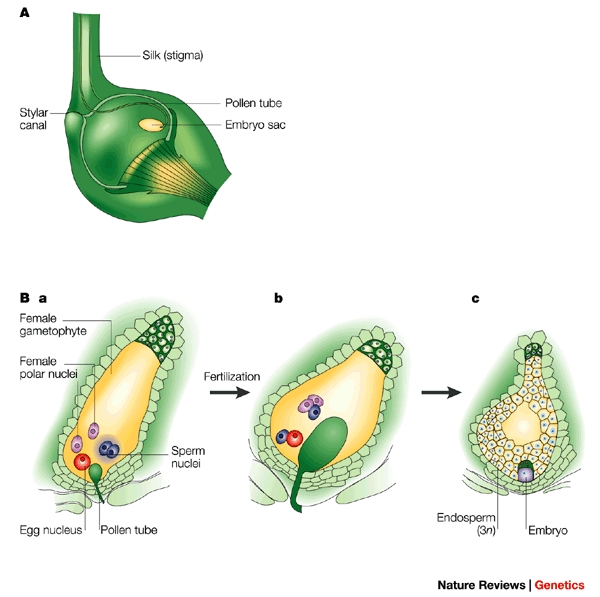
Double fertilisation in angiosperms: one male gamete fuses with the egg to form the diploid zygote (syngamy), while the second fuses with the two polar nuclei to form the triploid primary endosperm nucleus (triple fusion). Image: Triploid, CC BY 3.0, via Wikimedia Commons.
Concept context
Flower structure, pollination, double fertilization, and seed/fruit development - the highest-scoring Class 12 biology chapter in NEET.
Read the full Sexual Reproduction in Flowering Plants notes →