Answer: Morphological matching between flower structure and pollinator anatomy (orchid-bee coevolution, yucca-yucca moth mutualism).
- A Flower shapes that vary largely at random with little underlying functional correlation overall under most conditions encountered
- B Morphological matching between flower structure and pollinator anatomy (orchid-bee coevolution, yucca-yucca moth mutualism)
- C Generalist pollinators that visit nearly every available flower species with little discrimination as frequently observed in practice
- D Plants that rely mainly on ambient wind currents for transferring pollen between flowers in many documented cases according to conventional understanding
Correct answer: B. Morphological matching between flower structure and pollinator anatomy (orchid-bee coevolution, yucca-yucca moth mutualism)
Explanation: Flower-pollinator coevolution: plants and pollinators evolve together. Darwin predicted the Malagasy star orchid required a moth with 30 cm tongue to reach nectar -- confirmed 100 years later.
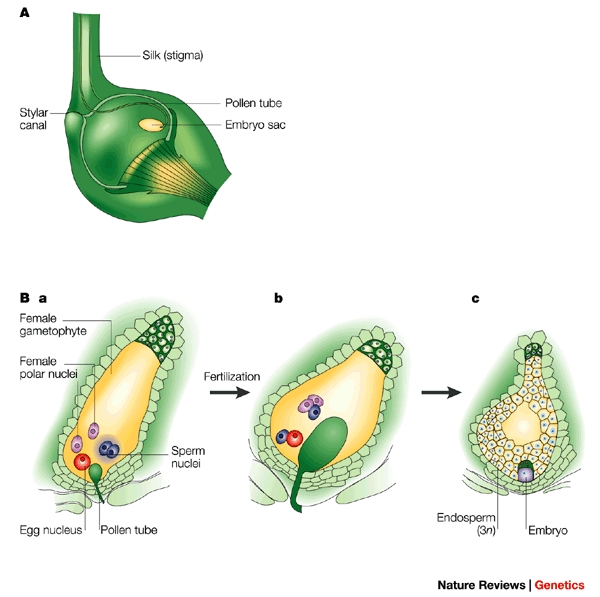
Double fertilisation in angiosperms: one male gamete fuses with the egg to form the diploid zygote (syngamy), while the second fuses with the two polar nuclei to form the triploid primary endosperm nucleus (triple fusion). Image: Triploid, CC BY 3.0, via Wikimedia Commons.
Concept context
Flower structure, pollination, double fertilization, and seed/fruit development - the highest-scoring Class 12 biology chapter in NEET.
Read the full Sexual Reproduction in Flowering Plants notes →