Answer: Genetically identical to the mother plant.
- A Always triploid
- B Genetically identical to the mother plant
- C Free of any endosperm
- D Formed entirely without any protective seed coat
Correct answer: B. Genetically identical to the mother plant
Explanation: Nucellar apomixis produces embryos from diploid sporophytic tissue, so the resulting seedlings are genetically identical clones of the parent, preserving hybrid vigour.
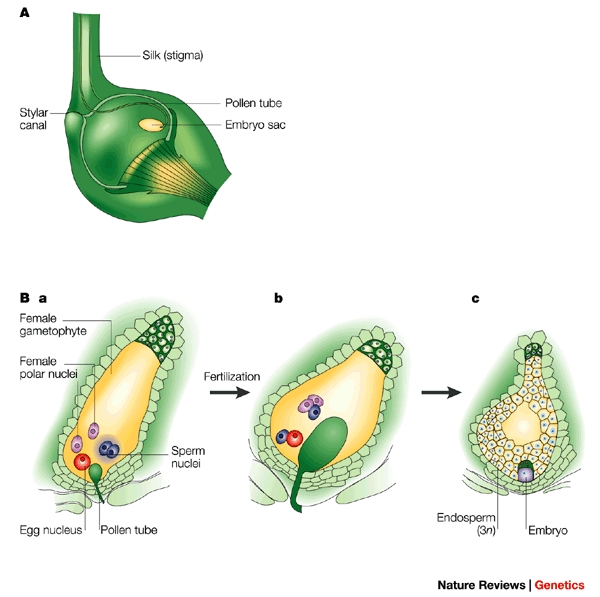
Double fertilisation in angiosperms: one male gamete fuses with the egg to form the diploid zygote (syngamy), while the second fuses with the two polar nuclei to form the triploid primary endosperm nucleus (triple fusion). Image: Triploid, CC BY 3.0, via Wikimedia Commons.
Concept context
Flower structure, pollination, double fertilization, and seed/fruit development - the highest-scoring Class 12 biology chapter in NEET.
Read the full Sexual Reproduction in Flowering Plants notes →