🔬 Biology · Class 12 · NEET
Human Reproduction - Practice Questions with Answers
75 free MCQs on Human Reproduction, each with its own worked answer and explanation. Male and female reproductive systems, gametogenesis, fertilization, implantation, pregnancy, and reproductive health.
Take the timed Human Reproduction chapterwise test →75 practice questions on Human Reproduction, sorted Easy → Hard. Try each one first, then open its answer page for the worked explanation. Want the full theory first? Read the Human Reproduction notes.
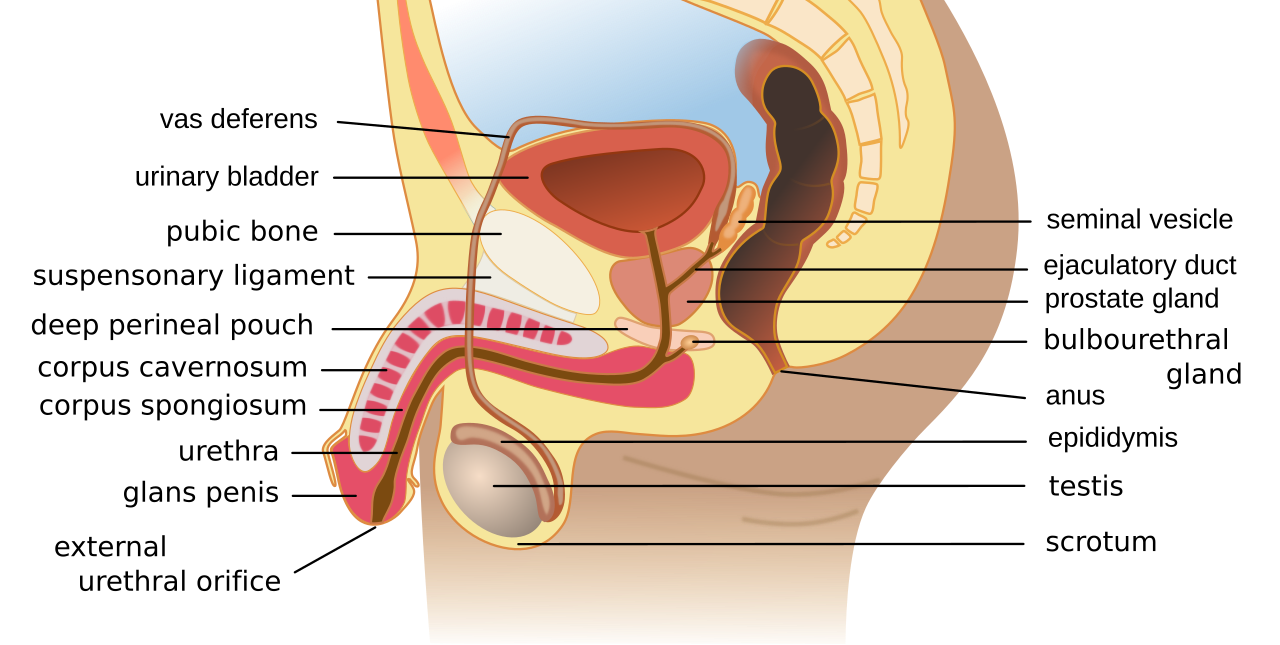
The human male reproductive system: sperm formed in the testis mature in the epididymis and travel via the vas deferens, mixing with secretions of the seminal vesicle, prostate and bulbourethral glands. Image: Wumingbai, CC BY-SA 4.0, via Wikimedia Commons.
Easy - 25 questions
Q1.
The tightly coiled tubules where spermatozoa are actually produced in the testis are the:
- A Seminiferous tubules
- B Vasa efferentia
- C Rete testis
- D Ejaculatory ducts
Show answer & explanation →
Q2.
Leydig cells (interstitial cells) located outside the seminiferous tubules mainly secrete:
- A Oestrogen
- B Androgens
- C Inhibin
- D Progesterone
Show answer & explanation →
Q3.
In the human ovary, the layer of granulosa cells and a fluid-filled cavity characterise the:
- A Primary follicle
- B Corpus albicans
- C Graafian follicle
- D Primordial follicle
Show answer & explanation →
Q4.
The fluid portion of semen is contributed mainly by the seminal vesicles, prostate and the:
- A Rete testis
- B Epididymis only
- C Seminiferous tubules
- D Bulbourethral glands
Show answer & explanation →
Q5.
The stage of the embryo that implants into the uterine wall is the:
- A Blastocyst
- B Morula
- C Gastrula
- D Zygote
Show answer & explanation →
Q6.
Where does fertilization normally occur in the female body?
- A Uterus, in the upper region near the fundus
- B Ovary, immediately after the follicle ruptures
- C Fallopian tube (oviduct)
- D Vagina, near the external os of the cervix
Show answer & explanation →
Q7.
What is ovulation?
- A Formation of new eggs within the ovary each cycle
- B Release of a mature egg from the ovary
- C Implantation of the embryo into the uterine wall
- D Start of the monthly menstrual bleeding phase
Show answer & explanation →
Q9.
What is the function of the placenta?
- A Produces sperm cells used during the process of fertilization itself
- B Exchange of nutrients, oxygen, and waste between mother and fetus
- C Stores all of a female's immature eggs until ovulation eventually occurs each month
- D Produces milk after childbirth from cells within the mammary alveoli
Show answer & explanation →
Q10.
Pregnancy is detected using which hormone?
- A FSH, which rises sharply after implantation
- B LH, surging from the anterior pituitary
- C hCG (human chorionic gonadotropin)
- D Progesterone, secreted directly by the placenta
Show answer & explanation →
Q12.
What hormone triggers ovulation?
- A FSH, which instead stimulates follicle growth
- B Estrogen, which builds up the uterine lining
- C LH (Luteinizing Hormone)
- D Progesterone, which maintains pregnancy afterward
Show answer & explanation →
Q13.
What is the function of the corpus luteum?
- A Produces sperm cells continuously within the seminiferous tubules of the testes
- B Produces progesterone and estrogen to maintain uterine lining after ovulation
- C Stores all unfertilized eggs within the outer cortex of the ovary indefinitely
- D Releases FSH directly from specialized cells of the anterior pituitary gland
Show answer & explanation →
Q14.
What does the embryo implant into?
- A Cervix, the narrow lower part of the uterus
- B Ovary, where eggs are normally stored
- C Endometrium (uterine lining)
- D Fallopian tube, where fertilization usually occurs
Show answer & explanation →
Q16.
What is the role of the acrosome in sperm?
- A Provides chemical energy for sperm motility via mitochondrial respiration
- B Contains enzymes that digest the egg cell coating, allowing sperm to penetrate
- C Carries the haploid genetic material packaged tightly within the nucleus
- D Produces and powers the flagellum during late spermatid maturation
Show answer & explanation →
Q17.
Human gestation period is approximately
- A 9 months (38-40 weeks)
- B 6 months, roughly two trimesters
- C 12 months, a full calendar year
- D 4 months, about one trimester
Show answer & explanation →
Q18.
What is parturition?
- A Fertilization of the egg by sperm in the oviduct
- B The process of childbirth (delivery of baby)
- C Implantation of the blastocyst into the endometrium
- D First detectable heartbeat of the developing fetus
Show answer & explanation →
Q19.
The germ cells (sperm and eggs) are produced by which type of cell division?
- A Mitosis
- B Meiosis
- C Binary fission
- D Budding
Show answer & explanation →
Q20.
What is oogenesis?
- A Sperm production in testes
- B Production of eggs in the ovaries
- C Fertilization process
- D Implantation of embryo
Show answer & explanation →
Q21.
Which structure provides the sperm with energy for swimming?
- A Acrosome
- B Head (nucleus)
- C Midpiece (mitochondria)
- D Tail (flagellum)
Show answer & explanation →
Q22.
What is the function of seminal vesicles?
- A Store and temporarily mature sperm cells in a coiled duct before ejaculation takes place
- B Produce fructose-rich fluid that nourishes sperm and makes up about 60% of semen volume
- C Produce testosterone under direct stimulation from luteinizing hormone released by the pituitary
- D Filter out structurally abnormal or immotile sperm cells before they are ever released
Show answer & explanation →
Q23.
IVF (In Vitro Fertilization) involves
- A Fertilization that occurs naturally and spontaneously inside the fallopian tube
- B Fertilization outside the body in a lab dish, then transfer of embryo to uterus
- C Injection of sperm directly into the uterine cavity using a thin catheter
- D Fertilization that uses eggs taken specifically from a donor rather than the patient
Show answer & explanation →
Q24.
What is menstruation?
- A Release of a mature egg from the ovarian follicle at the midpoint of the cycle
- B Shedding of the endometrium lining when pregnancy does not occur
- C Fertilization of the egg by sperm somewhere within the fallopian tube
- D Implantation of the developing blastocyst into the thickened uterine wall
Show answer & explanation →
Q25.
What is a condom used as?
- A A contraceptive pill that must be taken orally at the same time every day
- B A hormonal contraceptive that suppresses ovulation through daily hormone release
- C Barrier contraceptive that prevents sperm from reaching egg
- D An IUD that is surgically inserted into the uterine cavity by a doctor
Show answer & explanation →
Medium - 25 questions
Q26.
The acrosome of the sperm head is derived from which cell organelle?
- A Mitochondrion
- B Golgi body
- C Centriole
- D Ribosome
Show answer & explanation →
Q27.
The hormone inhibin, which feeds back to reduce FSH secretion, is produced by the:
- A Anterior pituitary
- B Leydig cells
- C Sertoli cells
- D Corpus luteum only
Show answer & explanation →
Q28.
In a 28-day menstrual cycle, the endometrium is at its thickest and most vascular during the:
- A Day of ovulation only
- B Menstrual phase
- C Early follicular phase
- D Secretory (luteal) phase
Show answer & explanation →
Q29.
The extra-embryonic membrane that contributes the foetal part of the placenta is the:
- A Chorion
- B Amnion
- C Allantois
- D Yolk sac
Show answer & explanation →
Q30.
During spermiogenesis, the spermatids are transformed into:
- A Primary spermatocytes
- B Motile spermatozoa
- C Spermatogonia
- D Secondary spermatocytes
Show answer & explanation →
Q31.
What is spermatogenesis and where does it occur?
- A Egg production occurring mainly within the developing follicles located deep inside the ovary, under FSH and LH control under usual circumstances according to most researchers
- B Sperm production in the seminiferous tubules of the testes; involves mitosis of spermatogonia then meiosis to produce spermatocytes then spermatids then mature sperm
- C Production of the hormone testosterone by the interstitial Leydig cells found scattered throughout testis tissue, stimulated by LH in the majority of cases studied
- D Sperm storage and the final stage of maturation occurring within the long, tightly coiled epididymis tube over roughly three weeks as widely reported in standard practice
Show answer & explanation →
Q32.
What is the follicular phase of the menstrual cycle?
- A Days 15 through 28 occurring after ovulation, dominated largely by corpus luteum activity under most conditions encountered
- B Days 1-13 when FSH stimulates follicle growth and estrogen rises, preparing the endometrium for possible implantation
- C The brief phase during which most of the endometrial lining sheds away gradually as frequently observed in practice
- D The specific phase during which the blastocyst embeds itself into the endometrial wall over several days in many documented cases
Show answer & explanation →
Q33.
What is the luteal phase and what happens if fertilization does not occur?
- A The phase occurring well before ovulation even takes place, while the single dominant follicle is still developing under FSH according to conventional understanding in routine practice
- B Post-ovulation phase (days 15-28) when corpus luteum secretes progesterone; if no fertilization, corpus luteum degenerates, progesterone falls, endometrium sheds (menstruation)
- C The proliferative phase, during which steadily rising estrogen levels gradually rebuild the endometrial lining tissue each cycle overall in most cases under typical conditions
- D The phase in which the primary oocyte undergoes its final stage of nuclear maturation, completing meiosis mainly at fertilization according to standard textbooks in general practice
Show answer & explanation →
Q34.
What prevents polyspermy (entry of more than one sperm)?
- A Generally just one sperm cell is physically released from the testes during each reproductive cycle as frequently described
- B Fast block (membrane depolarization) within seconds + slow block (cortical reaction releases enzymes that harden zona pellucida)
- C The cervix mechanically filters out most sperm cells, generally allowing mainly a small number through each cycle in most textbook accounts
- D Generally the fastest-swimming sperm cell present is most able to physically reach the egg first during normal conditions as generally observed
Show answer & explanation →
Q35.
What are the three primary germ layers formed during gastrulation and what do they form?
- A Ectoderm, endoderm, and mesoderm, all sometimes thought to derive mainly from the neural crest in typical laboratory settings
- B Ectoderm (skin, nervous system), mesoderm (muscles, bones, circulatory), endoderm (gut lining, lungs, liver)
- C Trophoblast, inner cell mass, and blastocoel, formed before implantation occurs under usual circumstances
- D Mainly two layers form initially - ectoderm and endoderm, with little mesoderm contribution according to most researchers
Show answer & explanation →
Q36.
How does the contraceptive pill work?
- A It kills sperm cells directly upon contact within the uterine cavity, shortly after sexual intercourse occurs in the majority of cases studied
- B Combined pill (estrogen + progesterone) suppresses FSH and LH, preventing follicle development and ovulation; also thickens cervical mucus
- C It is sometimes thought to work mainly by preventing the implantation of an already fertilized egg as widely reported in standard practice
- D It is sometimes thought to work mainly by directly killing sperm cells located within the vaginal canal under most conditions encountered
Show answer & explanation →
Q37.
What is the role of testosterone in male reproductive function?
- A Produces mature sperm cells largely by itself, without requiring much other supporting hormonal signaling as frequently observed in practice in many documented cases
- B Stimulates spermatogenesis, development of secondary sex characteristics (facial hair, deep voice, muscle mass), and maintains male reproductive organs
- C Controls the release of FSH mainly from specialized neurosecretory cells located within the hypothalamus region according to conventional understanding
- D Is produced mainly within the adrenal cortex gland rather than within the testes themselves under most circumstances in routine practice overall in most cases
Show answer & explanation →
Q38.
What is the amniotic fluid and what is its role?
- A Fluid that lubricates the birth canal mainly during the final stages of the childbirth delivery process, secreted by cervical glands under typical conditions according to standard textbooks
- B Fluid surrounding the fetus in the amniotic sac; provides cushioning against trauma, maintains temperature, allows fetal movement, and is swallowed by fetus to develop digestive system
- C Fluid that is secreted mainly by the specialized trophoblast cells of the developing placenta tissue itself, separate from the amnion in general practice as frequently described in most textbook accounts
- D Fluid whose main function throughout much of the pregnancy is the direct transport of nutrients toward the growing fetus via diffusion during normal conditions as generally observed
Show answer & explanation →
Q39.
What is the difference between FSH and LH in female reproductive cycle?
- A Both hormones perform a largely similar regulatory role within the developing ovarian follicle in typical laboratory settings under usual circumstances
- B FSH stimulates follicle growth and estrogen secretion in first half of cycle; LH surge triggers ovulation and then maintains corpus luteum
- C LH instead stimulates the growth of the follicle, while FSH is the hormone that triggers ovulation according to most researchers in the majority of cases studied
- D FSH is sometimes thought to be secreted mainly within males, with females relying mainly on LH for cycle control as widely reported in standard practice
Show answer & explanation →
Q40.
What is GIFT (Gamete Intrafallopian Transfer)?
- A Fertilization that takes place mainly within a laboratory culture dish setting before transfer under most conditions encountered
- B Retrieval of eggs and sperm which are then placed directly into the fallopian tube for in vivo fertilization
- C Direct microinjection of a single sperm cell into the cytoplasm of a retrieved egg cell as frequently observed in practice
- D Transfer of an embryo that has already formed into the cavity of the uterus directly in many documented cases
Show answer & explanation →
Q41.
What causes miscarriage (spontaneous abortion) in early pregnancy?
- A Excessively elevated levels of the hCG hormone secreted continuously by the developing trophoblast tissue layer according to conventional understanding
- B Most early miscarriages (first trimester) are due to chromosomal abnormalities in the embryo; also maternal factors (uterine abnormalities, hormonal issues)
- C Insufficient FSH secretion occurring mainly from the anterior pituitary gland of the mother herself in routine practice overall in most cases under typical conditions
- D Physical trauma occurring largely alone, with little contribution from any underlying genetic factor present according to standard textbooks in general practice
Show answer & explanation →
Q42.
What is the role of oxytocin in parturition and breastfeeding?
- A Oxytocin mainly regulates water balance through its action on the kidney collecting ducts as frequently described in most textbook accounts
- B Oxytocin causes uterine contractions during labor (positive feedback loop) and milk ejection (let-down reflex) during breastfeeding
- C Oxytocin is sometimes mistakenly thought to suppress uterine contractions throughout the process of labor during normal conditions
- D Oxytocin directly synthesizes milk proteins within the mammary alveolar cells, according to some misconceptions as generally observed
Show answer & explanation →
Q43.
What is the difference between the primary and secondary oocyte?
- A Both stages represent cytologically and genetically largely similar phases of the overall oocyte maturation process occurring throughout development from infancy in typical laboratory settings under usual circumstances
- B Primary oocyte (diploid, 2n) is arrested in prophase I; at ovulation it completes meiosis I to become secondary oocyte (haploid, n, with first polar body); meiosis II completes only if fertilization occurs
- C The secondary oocyte form is sometimes mistakenly described as the developmental stage released from the ovary at birth rather than at puberty according to most researchers in the majority of cases studied
- D The primary oocyte is sometimes thought to finish most of meiosis well before ovulation takes place during the cycle, completing it in the fetus as widely reported in standard practice under most conditions encountered
Show answer & explanation →
Q44.
What are sexually transmitted infections (STIs) and name three common ones?
- A Diseases that are transmitted mainly through the bite of an infected mosquito vector species, like malaria or dengue as frequently observed in practice in many documented cases
- B Infections transmitted through sexual contact: HIV/AIDS (retrovirus), gonorrhoea (Neisseria), syphilis (Treponema), hepatitis B (virus), chlamydia (Chlamydia trachomatis)
- C Mainly bacterial infections occur within this disease category, with few viral agents involved in transmission overall according to conventional understanding in routine practice
- D Mainly viral infections occur within this disease category, with few bacterial agents involved in transmission overall overall in most cases under typical conditions
Show answer & explanation →
Q45.
What is implantation and when does it occur?
- A The precise moment when sperm and egg first meet within the fallopian tube, before any division
- B Process by which blastocyst embeds into the endometrium; occurs 6-7 days after fertilization
- C The release of a fully mature egg from the ovarian follicle during ovulation, before fertilization
- D The final delivery of the baby occurring at the very end of the full gestation period
Show answer & explanation →
Q46.
What are the layers of the uterus?
- A Mainly a single thick muscular layer surrounding the uterine cavity from end to end, with little inner lining according to standard textbooks
- B Endometrium (inner lining, shed in menstruation), myometrium (thick muscle layer for contractions), perimetrium (outer serosal covering)
- C Mainly two distinct layers are present overall, largely lacking any outer serosal covering tissue in general practice as frequently described
- D Endometrium and serosa mainly are present, with little intervening muscular layer existing between them in most textbook accounts during normal conditions
Show answer & explanation →
Q47.
What is ectopic pregnancy?
- A A pregnancy that involves two separate fetuses developing simultaneously together in the uterus
- B Implantation of embryo outside the uterus (usually in fallopian tube); life-threatening as tube can rupture
- C An early miscarriage occurring within the first few weeks of gestation, before any implantation issue
- D A pregnancy that results mainly from in vitro fertilization treatment in some cases
Show answer & explanation →
Q50.
Fertilisation in humans normally takes place in the:
- A the fallopian tube
- B the uterus wall
- C the ovary itself
- D the vaginal canal
Show answer & explanation →
Hard - 25 questions
Q51.
The first meiotic division of the primary oocyte is completed only at ovulation and produces a secondary oocyte plus a:
- A Pair of spermatids
- B Second polar body
- C First polar body
- D Diploid zygote
Show answer & explanation →
Q52.
The human secondary oocyte completes the second meiotic division only:
- A Before puberty
- B At ovulation
- C During implantation
- D After a sperm enters it
Show answer & explanation →
Q53.
Human chorionic gonadotropin (hCG) secreted in early pregnancy maintains pregnancy mainly by:
- A Sustaining the corpus luteum so progesterone continues
- B Stimulating fresh ovulation of a new ovarian follicle
- C Triggering menstruation
- D Inhibiting placental growth
Show answer & explanation →
Q54.
The cortical reaction of the egg, triggered at sperm contact, prevents polyspermy by:
- A Increasing the total number of sperm acrosomes
- B Altering the zona pellucida so no more sperm can bind
- C Dissolving the corona radiata
- D Halting meiosis of the oocyte
Show answer & explanation →
Q55.
At parturition, the foetal ejection reflex is a positive feedback loop in which uterine contractions stimulate further release of:
- A FSH from the anterior pituitary
- B Progesterone from the corpus luteum
- C Oxytocin from the maternal pituitary
- D Relaxin from the placenta only
Show answer & explanation →
Q56.
Explain the hormonal changes during early pregnancy that prevent menstruation.
- A FSH hormone is sometimes thought to directly prevent menstruation by acting upon the cells of the endometrium itself each cycle in many documented cases according to conventional understanding in routine practice
- B hCG from trophoblast rescues the corpus luteum from degeneration, maintaining progesterone production; high progesterone maintains endometrium and suppresses FSH/LH, preventing follicle development and menstruation
- C LH alone is sometimes thought to prevent menstruation directly through its own dedicated hormone receptor located specifically on uterine endometrial cells overall in most cases under typical conditions according to standard textbooks
- D Estrogen alone, without much meaningful contribution from progesterone secretion, is sometimes thought to actually prevent menstruation from occurring in general practice as frequently described in most textbook accounts
Show answer & explanation →
Q57.
What is the significance of the zona pellucida in fertilization?
- A It is sometimes thought to be generally the ordinary outer plasma membrane that surrounds the egg cell itself, nothing more biochemically specialized during normal conditions as generally observed
- B A glycoprotein matrix around the oocyte; ZP3 acts as sperm receptor triggering acrosome reaction; ZP2 binds acrosin post-acrosome reaction; after fertilization it hardens to prevent polyspermy
- C It is sometimes thought to produce progesterone hormone directly itself, helping to maintain the lining of the uterine endometrium each cycle in typical laboratory settings under usual circumstances
- D It is sometimes thought to be largely shed away from the surface of the oocyte well before ovulation itself actually takes place according to most researchers in the majority of cases studied
Show answer & explanation →
Q58.
What is the molecular basis of sex determination in humans?
- A The Y chromosome is sometimes thought to carry little gene of any kind responsible for determining the sex of the developing embryo as widely reported in standard practice
- B SRY gene on Y chromosome encodes testis-determining factor (TDF/SRY protein) that triggers testicular development; without SRY, default pathway leads to ovarian development
- C Sex is sometimes thought to be determined mainly by a set of genes located specifically on the X chromosome instead of the Y chromosome under most conditions encountered
- D Sex is sometimes thought to be determined mainly by the total overall number of chromosomes present in the karyotype, regardless of which ones as frequently observed in practice
Show answer & explanation →
Q59.
What is genomic imprinting and how does it affect fetal development?
- A Both parental genomes are sometimes thought to be expressed at exactly equal levels throughout fetal development, with little asymmetry present in many documented cases according to conventional understanding
- B Certain genes are epigenetically silenced depending on parental origin; some are expressed only from paternal copy, others only from maternal copy; disruption causes developmental disorders
- C All genes within the fetal genome are sometimes thought to be expressed mainly from the maternal copy, with most paternal copies largely silenced in routine practice overall in most cases
- D Genomic imprinting has sometimes been thought to have little detectable effect on fetal development under most circumstances studied so far under typical conditions according to standard textbooks
Show answer & explanation →
Q60.
What is the difference between embryo and fetus in human development?
- A Both terms are sometimes thought to refer to exactly the same developmental stage and are generally used interchangeably by most clinicians today
- B Embryo: from fertilization to 8 weeks (organogenesis, primary tissue formation); fetus: from 9 weeks to birth (growth and maturation of formed organs)
- C The fetal stage is sometimes thought to occur chronologically before the embryonic stage in the overall sequence of human development in general practice
- D The embryonic stage is sometimes thought to begin mainly after the third month of gestation has already largely passed by that point as frequently described
Show answer & explanation →
Q61.
Describe the positive feedback mechanism of the LH surge.
- A High circulating levels of the LH hormone itself are sometimes thought to directly inhibit further secretion of estrogen from the developing ovarian follicle in most textbook accounts during normal conditions
- B When estrogen rises above a threshold during follicular phase, it switches from negative to positive feedback on the hypothalamus-pituitary axis, causing massive GnRH and then LH surge, triggering ovulation
- C The mid-cycle LH surge is sometimes thought to be triggered mainly by rising levels of progesterone hormone rather than by estrogen itself as generally observed in typical laboratory settings under usual circumstances
- D FSH hormone itself is sometimes thought to directly cause the mid-cycle LH surge to occur each cycle, largely without any estrogen signal involved according to most researchers in the majority of cases studied
Show answer & explanation →
Q62.
What are teratogens and during which developmental window are they most harmful?
- A Teratogens are sometimes thought to be actually beneficial agents that meaningfully support healthy fetal growth and organ development throughout pregnancy as widely reported
- B Agents that cause birth defects; most harmful during organogenesis (weeks 3-8 of embryonic period) when organs are forming; different organ systems have specific sensitive periods
- C Teratogens are sometimes understood to be equally harmful across most stage of pregnancy, with little particular sensitive window identified in standard practice under most conditions encountered
- D Teratogens are sometimes thought to affect mainly neural tissue specifically, sparing most other developing organ systems from harmful effects as frequently observed in practice
Show answer & explanation →
Q63.
What is the molecular mechanism of surfactant production and its clinical significance?
- A Surfactant is sometimes thought to be synthesized mainly within the fetal liver tissue itself and subsequently transported all the way through the bloodstream to the developing lungs in many documented cases according to conventional understanding
- B Pulmonary surfactant (mainly DPPC: dipalmitoylphosphatidylcholine) is produced by type II pneumocytes from about 24 weeks; it reduces alveolar surface tension; deficiency causes neonatal respiratory distress syndrome (NRDS) in premature infants
- C Surfactant is sometimes thought to be produced mainly by the fetal kidney tissue itself and subsequently excreted directly into the surrounding amniotic fluid each day in routine practice overall in most cases under typical conditions according to standard textbooks
- D Surfactant production is sometimes thought to begin mainly at the precise moment of birth itself, with little present beforehand while developing largely in utero in general practice as frequently described in most textbook accounts during normal conditions
Show answer & explanation →
Q64.
What is pre-eclampsia and what are its causes?
- A A minor and largely inconsequential hormonal imbalance that typically resolves on its own without requiring much medical treatment in most cases as generally observed in typical laboratory settings under usual circumstances
- B A serious pregnancy complication: high blood pressure + proteinuria after 20 weeks; caused by abnormal placentation with poor trophoblast invasion and inadequate spiral artery remodeling, causing placental ischemia
- C Nausea that is confined mainly to the first trimester period of pregnancy, with few symptoms occurring afterward in most documented cases according to most researchers in the majority of cases studied as widely reported
- D A specific type of sexually transmitted infection that mainly affects women during the course of pregnancy specifically, according to some misconceptions in standard practice under most conditions encountered
Show answer & explanation →
Q65.
What is the significance of colostrums in passive immunity of newborns?
- A Colostrum is sometimes thought to have little immune function and instead serves a mainly nutritional role for the newborn infant in most cases as frequently observed in practice in many documented cases
- B Colostrum (first breast milk secreted 2-3 days postpartum) is rich in IgA (secretory), IgG, lactoferrin, lysozyme, and immune cells; provides passive mucosal immunity to newborn whose immune system is immature
- C Colostrum is sometimes thought to provide mainly basic caloric nutrition to the infant, largely lacking any immune-related protective components according to conventional understanding in routine practice
- D Colostrum is sometimes thought to provide mainly IgM class antibodies to the newborn infant, with few other immune-related factors present overall in most cases under typical conditions according to standard textbooks
Show answer & explanation →
Q66.
What is Klinefelter syndrome and Turner syndrome in terms of sex chromosome abnormalities?
- A Both of these distinct medical conditions are sometimes thought to be clinically, genetically, and phenotypically quite similar to one another in most observed respects in general practice as frequently described in most textbook accounts
- B Klinefelter (47,XXY): male phenotype, infertility, small testes, gynecomastia, tall; due to extra X chromosome in male. Turner (45,X0): female phenotype, short stature, webbed neck, primary amenorrhea, infertility; due to missing X chromosome
- C Klinefelter syndrome is sometimes thought to actually produce an overall female phenotype while Turner syndrome instead produces a distinctly male phenotype in most cases during normal conditions as generally observed in typical laboratory settings
- D Both of these syndromes are sometimes thought to be caused specifically by the presence of an extra Y chromosome rather than by any X chromosome abnormality whatsoever under usual circumstances according to most researchers in the majority of cases studied
Show answer & explanation →
Q67.
How is the sex of an individual determined in humans and what is the genetic basis?
- A Determined mainly by the ambient environmental temperature present specifically during early embryonic development, much like in certain reptile species studied widely
- B Determined by sex chromosomes: XX = female, XY = male. Y chromosome carries SRY gene, which triggers testicular development; without it, female development occurs by default
- C Determined by the total overall number of autosomes present within the individual's complete karyotype overall, rather than by the sex chromosomes themselves in any way
- D Determined mainly by the biological age of the mother at the precise moment of conception itself, rather than by any underlying genetic factor present at the time
Show answer & explanation →
Q68.
The process of formation of sperms in the testes is called:
- A spermatogenesis
- B oogenesis stage
- C the ovulation
- D the gestation
Show answer & explanation →
Q69.
A surge of which hormone triggers ovulation?
- A luteinising hormone (LH)
- B the hormone insulin
- C the hormone thyroxine
- D the hormone adrenaline
Show answer & explanation →
Q70.
The organ that supplies nutrients and oxygen to the developing foetus is the:
- A placenta
- B amnion
- C chorion
- D yolk sac
Show answer & explanation →
Q71.
The normal human gestation (pregnancy) period is approximately:
- A nine months
- B six months
- C twelve months
- D three months
Show answer & explanation →
Q72.
The release of a secondary oocyte from a mature ovarian follicle is called:
- A ovulation
- B menstruation
- C fertilisation
- D implantation
Show answer & explanation →
Q74.
Menstruation is triggered by a fall in the blood levels of:
- A progesterone and estrogen
- B insulin and glucagon
- C thyroxine and TSH only
- D adrenaline hormone only
Show answer & explanation →
Q75.
The attachment of the early embryo (blastocyst) to the wall of the uterus is called:
- A implantation
- B ovulation
- C fertilisation
- D gastrulation
Show answer & explanation →