🔬 Biology · Class 11 · NEET
Digestion and Absorption - Practice Questions with Answers
75 free MCQs on Digestion and Absorption, each with its own worked answer and explanation. The digestive tract, digestive enzymes, hormonal control of digestion, and liver function. High NEET weightage.
Take the timed Digestion and Absorption chapterwise test →75 practice questions on Digestion and Absorption, sorted Easy → Hard. Try each one first, then open its answer page for the worked explanation. Want the full theory first? Read the Digestion and Absorption notes.
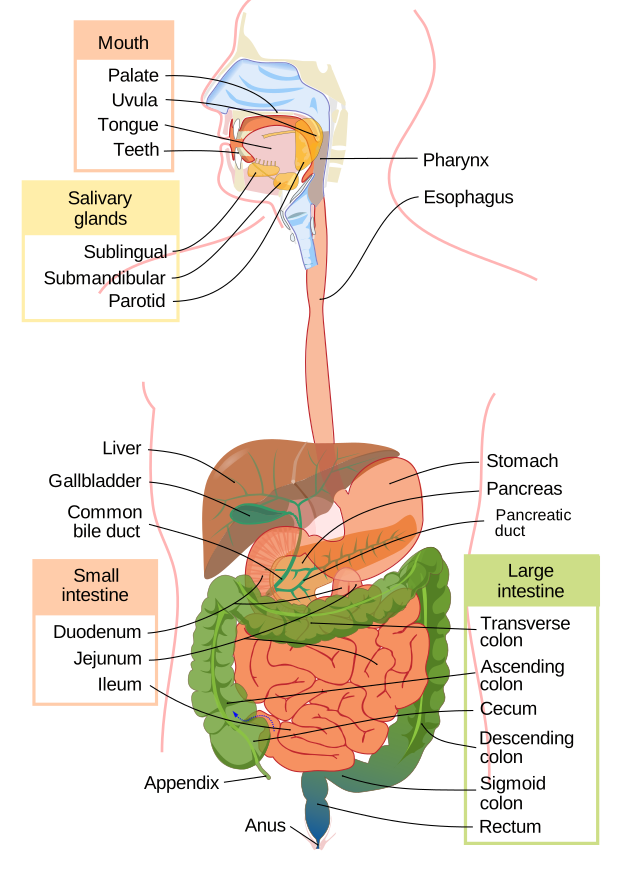
The human digestive system. Image: LadyofHats (Mariana Ruiz), Public Domain, via Wikimedia Commons.
Easy - 25 questions
Q1.
The type of teeth attachment in humans, where each tooth is fixed in a bony socket of the jaw, is called:
- A Thecodont
- B Diphyodont
- C Heterodont
- D Polyphyodont
Show answer & explanation →
Q2.
The hard, outermost covering of a tooth, which is the hardest substance in the body, is the:
- A Dentine
- B Pulp
- C Enamel
- D Cementum
Show answer & explanation →
Q3.
The three main pairs of salivary glands that pour saliva into the mouth are the parotid, submaxillary and:
- A Sublingual
- B Adrenal
- C Thyroid
- D Pancreatic
Show answer & explanation →
Q4.
The muscular sphincter that guards the opening of the stomach into the duodenum is the:
- A Cardiac sphincter
- B Pyloric sphincter
- C Anal sphincter
- D Ileocaecal sphincter
Show answer & explanation →
Q5.
The small blind sac at the junction of the small and large intestine, from which the appendix arises, is the:
- A Rectum
- B Colon
- C Ileum
- D Caecum
Show answer & explanation →
Q8.
Bile is produced by the _____ and stored in the _____:
- A Pancreas, liver
- B Liver, gall bladder
- C Stomach, liver
- D Gall bladder, pancreas
Show answer & explanation →
Q9.
The enzyme salivary amylase digests:
- A Proteins, broken down later in the stomach
- B Fats, emulsified later by bile in the intestine
- C Starch (carbohydrates)
- D DNA, broken down by nucleases in the intestine
Show answer & explanation →
Q10.
The wave-like muscular contractions that move food along the alimentary canal are called:
- A Deglutition
- B Egestion
- C Peristalsis
- D Emulsification
Show answer & explanation →
Q11.
Pepsinogen, the inactive precursor of pepsin, is secreted by cells of the:
- A Liver
- B Salivary glands
- C Pancreas
- D Gastric glands
Show answer & explanation →
Q12.
The pancreas releases digestive enzymes into the small intestine through the:
- A Pancreatic duct
- B Bile duct alone
- C Cystic duct
- D Hepatic duct
Show answer & explanation →
Q13.
Finger-like projections that increase the surface area of the small intestine for absorption are called:
- A Villi
- B Crypts
- C Cilia
- D Rugae
Show answer & explanation →
Q14.
The undigested and unabsorbed remains of food are eliminated from the body through a process called:
- A Assimilation
- B Deglutition
- C Egestion
- D Ingestion
Show answer & explanation →
Q15.
Bile, though it contains no digestive enzymes, helps in fat digestion mainly by:
- A Converting absorbed dietary fats into glucose units
- B Neutralising stomach acid before it enters the duodenum
- C Breaking fat molecules directly into fatty acids and glycerol
- D Emulsifying fat globules to raise the surface area for lipase
Show answer & explanation →
Q16.
The breakdown of complex food into simpler, absorbable substances is called:
- A digestion
- B respiration
- C circulation
- D excretion
Show answer & explanation →
Q18.
The enzyme in saliva that acts on starch is:
- A salivary amylase
- B gastric pepsin
- C pancreatic trypsin
- D pancreatic lipase
Show answer & explanation →
Q19.
The muscular organ where food is churned with gastric juice is the:
- A stomach
- B liver
- C pancreas
- D gall bladder
Show answer & explanation →
Q20.
Most of the absorption of digested food takes place in the:
- A small intestine
- B stomach
- C large intestine
- D mouth
Show answer & explanation →
Q23.
The finger-like projections that increase the absorptive surface of the small intestine are the:
- A villi
- B cilia
- C nephrons
- D alveoli
Show answer & explanation →
Q24.
Water from the food residue is mainly absorbed in the:
- A large intestine
- B the mouth
- C the stomach
- D the oesophagus
Show answer & explanation →
Medium - 25 questions
Q26.
Bile released into the duodenum makes the medium alkaline, which is necessary because it:
- A Activates salivary amylase
- B Activates pancreatic enzymes
- C Denatures trypsin
- D Curdles milk protein
Show answer & explanation →
Q27.
The enzyme in intestinal juice that converts inactive trypsinogen into active trypsin is:
- A Enterokinase
- B Nuclease
- C Dipeptidase
- D Maltase
Show answer & explanation →
Q28.
Absorbed fatty acids and glycerol are first re-formed into small fat droplets called chylomicrons within the:
- A Blood capillaries
- B Epithelial cells of villi
- C Liver lobules
- D Gall bladder
Show answer & explanation →
Q29.
The disaccharide lactose is finally digested by the intestinal enzyme lactase into:
- A Glucose and glucose
- B Glucose and fructose
- C Glucose and galactose
- D Fructose and galactose
Show answer & explanation →
Q30.
The mucus secreted by the gastric glands is important because it mainly:
- A Digests proteins
- B Emulsifies fats
- C Absorbs water
- D Protects the stomach lining from acid
Show answer & explanation →
Q31.
Peristalsis is the movement of:
- A Blood pumped through arteries by cardiac muscle contraction
- B Food through the digestive tract by rhythmic muscle contractions
- C Air drawn through bronchi by diaphragm contraction
- D Lymph propelled through vessels by one-way valves
Show answer & explanation →
Q32.
The portal vein carries blood from:
- A Heart to liver via the hepatic artery branch
- B Intestines (nutrient-rich blood) to liver for processing
- C Liver to heart through the hepatic vein
- D Kidneys to heart via the renal vein and vena cava
Show answer & explanation →
Q33.
Conjugation of bilirubin in the liver involves:
- A Deamination of bilirubin's amino groups to form urea for excretion
- B Attachment to glucuronic acid for water-solubility and bile excretion
- C Esterification of bilirubin with fatty acids for adipose storage
- D Direct packaging of unconjugated bilirubin into bile salts
Show answer & explanation →
Q34.
Secretin hormone from the duodenum stimulates the pancreas to:
- A Release zymogen-rich enzyme juice to digest proteins and fats
- B Secrete bicarbonate juice to neutralize stomach acid
- C Produce more insulin from pancreatic beta cells
- D Increase peristaltic contractions along the duodenal wall
Show answer & explanation →
Q35.
The main role of the large intestine is:
- A Protein digestion via pancreatic and intestinal enzymes
- B Lipid absorption through intestinal villi
- C Water and electrolyte reabsorption
- D Mainly vitamin synthesis by resident gut bacteria
Show answer & explanation →
Q36.
Salivary amylase begins the digestion of starch in the mouth, breaking it down into:
- A Glucose mainly in most observed cases
- B Maltose and smaller polysaccharides
- C Amino acids and peptides under typical physiological conditions
- D Fatty acids and glycerol according to standard texts
Show answer & explanation →
Q37.
Which accessory organ of digestion produces bile, which is then stored and concentrated in the gall bladder?
- A Spleen
- B Pancreas
- C Salivary glands
- D Liver
Show answer & explanation →
Q38.
In the stomach, pepsin acts optimally in a highly acidic environment maintained mainly by secretions from:
- A Mucous neck cells, which secrete pepsinogen
- B Parietal cells, which secrete hydrochloric acid
- C Goblet cells, which secrete bicarbonate
- D Chief cells, which secrete only mucus
Show answer & explanation →
Q39.
Villi and microvilli in the small intestine primarily function to:
- A Secrete digestive enzymes directly into the gut lumen in general clinical practice
- B Propel the food bolus forward through peristalsis as frequently documented
- C Increase the surface area available for absorption of digested food
- D Store fat reserves within the intestinal wall in most reference accounts
Show answer & explanation →
Q40.
Following protein digestion, the resulting amino acids are mainly absorbed into the:
- A Lymphatic vessels of the large intestine
- B Lacteals within the intestinal villi
- C Blood capillaries within the intestinal villi
- D Bile duct leading to the gall bladder
Show answer & explanation →
Q44.
The acid present in gastric juice is:
- A hydrochloric acid
- B strong sulfuric acid
- C dilute nitric acid
- D weak acetic acid
Show answer & explanation →
Q47.
Bile aids fat digestion by breaking large fat globules into smaller ones, a process called:
- A emulsification
- B fermentation
- C respiration
- D filtration
Show answer & explanation →
Q48.
The muscular tube that carries food from the mouth to the stomach is the:
- A oesophagus
- B the trachea
- C the ureter
- D the urethra
Show answer & explanation →
Q49.
The region of the alimentary canal immediately after the stomach is the:
- A small intestine
- B large intestine
- C oesophagus
- D mouth cavity
Show answer & explanation →
Q50.
The wave-like muscular contractions that push food along the gut are called:
- A peristalsis
- B simple diffusion
- C osmosis
- D filtration
Show answer & explanation →
Hard - 25 questions
Q51.
A person whose pancreatic duct is blocked would be least able to digest which of the following in the small intestine?
- A Only carbohydrates
- B Only proteins
- C Fats, proteins and carbohydrates
- D Only nucleic acids
Show answer & explanation →
Q52.
Steapsin present in pancreatic juice acts on emulsified fats to convert them into:
- A Amino acids
- B Glucose and galactose
- C Fatty acids and glycerol
- D Peptones and proteoses
Show answer & explanation →
Q53.
The succus entericus, or intestinal juice, contains several enzymes; the one that acts on nucleotides is:
- A Lipase
- B Maltase
- C Enterokinase
- D Nucleotidase
Show answer & explanation →
Q54.
Proteins are digested in stages; the correct sequence of intermediate products before amino acids is:
- A Proteoses then peptones then dipeptides
- B Peptides then peptones then proteoses
- C Dipeptides then peptones then proteoses
- D Peptones then dipeptides then proteoses
Show answer & explanation →
Q55.
Protein energy malnutrition in infants deprived of protein after weaning leads to a condition known as:
- A Marasmus
- B Kwashiorkor
- C Pellagra
- D Beri-beri
Show answer & explanation →
Q56.
Cholecystokinin (CCK) is released from I-cells of duodenum in response to:
- A Carbohydrate digestion products alone, triggering salivary amylase secretion reflexively each time
- B Fat and protein in duodenum; it stimulates pancreatic enzyme secretion and gall bladder contraction
- C Mechanical distension from water intake alone, activating duodenal stretch receptors directly
- D Glucose concentration sensed mainly by enteroendocrine K-cells located nearby in the gut
Show answer & explanation →
Q57.
The hepatic first-pass effect refers to:
- A The liver filtering nitrogenous waste products out of the blood before that blood ever reaches the kidneys for excretion
- B Orally ingested drugs being metabolized by the gut wall and liver before reaching systemic circulation, reducing bioavailability
- C Gradual drug accumulation occurring within hepatocytes specifically caused by an unusually slow rate of biliary clearance
- D Hepatic synthesis of various plasma proteins that happen to structurally resemble certain pharmaceutical drug compounds
Show answer & explanation →
Q58.
Trypsinogen secreted by the pancreas is activated to trypsin in the duodenum by:
- A Pepsin carried over from the stomach into the duodenum
- B Hydrochloric acid secreted by gastric parietal cells
- C Enterokinase, an enzyme produced by the intestinal mucosa
- D Bile salts released from the gall bladder
Show answer & explanation →
Q59.
Bile salts aid fat digestion mainly by:
- A Neutralizing the acidity of fats entering the duodenum under typical physiological conditions
- B Emulsifying large fat globules into smaller droplets, increasing surface area for lipase action
- C Activating pepsinogen in the stomach before fats reach the duodenum in most observed cases
- D Directly hydrolyzing triglycerides into fatty acids and glycerol under most conditions studied
Show answer & explanation →
Q60.
Most digested monosaccharides and amino acids are absorbed from the small intestine into the blood by:
- A Passive diffusion driven purely by their concentration gradient
- B Bulk endocytosis of luminal fluid by enterocytes
- C Active, energy-dependent transport across the intestinal epithelium
- D Direct transport through intercellular gaps between enterocytes
Show answer & explanation →
Q61.
Gastrin secreted by G-cells of the stomach mucosa primarily stimulates:
- A Bicarbonate-rich pancreatic juice secretion
- B Contraction of the gall bladder to release bile
- C Secretion of HCl and pepsinogen by gastric glands
- D Relaxation of the lower esophageal sphincter
Show answer & explanation →
Q62.
Why is pepsinogen secreted as an inactive zymogen rather than as active pepsin?
- A It ensures pepsin is mainly activated once it reaches the duodenum, away from the stomach in general clinical practice
- B It prevents the enzyme from digesting the stomach's own protein-rich gastric lining before reaching the lumen
- C It allows pepsinogen to also act as a hormone signalling acid secretion as frequently documented in most reference accounts
- D It allows pepsinogen to function optimally at the neutral pH found inside chief cells according to standard texts
Show answer & explanation →
Q63.
Vitamin B12 absorption in the ileum specifically requires:
- A Direct transport coupled to sodium-glucose cotransporters
- B Conjugation with bile salts in the duodenum
- C Binding to intrinsic factor secreted by gastric parietal cells
- D Hydrolysis by pancreatic amylase before uptake
Show answer & explanation →
Q64.
Chyme entering the duodenum from the stomach is strongly acidic. Its pH is raised mainly by:
- A Mucus secreted by Brunner's glands alone
- B Bile pigments released from the liver
- C Reabsorption of acid by the duodenal epithelium
- D Bicarbonate ions secreted in pancreatic juice
Show answer & explanation →
Q65.
Lacteals present in the villi of the small intestine are primarily responsible for absorbing:
- A Glucose and other monosaccharides
- B Digested fats in the form of chylomicrons
- C Water and electrolytes from the lumen
- D Amino acids derived from protein digestion
Show answer & explanation →
Q67.
The inactive precursor of the enzyme pepsin, secreted by the stomach, is:
- A pepsinogen
- B trypsinogen
- C plain zymogen
- D amylase
Show answer & explanation →
Q68.
Vitamins that are absorbed along with dietary fats and bile salts are the ___ vitamins:
- A fat-soluble
- B water-soluble
- C mineral-based
- D gaseous
Show answer & explanation →
Q70.
Assimilation refers to the ___ of absorbed nutrients by body cells:
- A utilisation
- B excretion
- C digestion
- D secretion
Show answer & explanation →
Q71.
Absorbed glucose and amino acids enter the bloodstream through the:
- A capillaries in the villi
- B the lymph vessels only
- C the air sacs of lungs
- D the kidney nephrons
Show answer & explanation →
Q73.
The vermiform appendix, a vestigial structure in humans, is attached to the:
- A caecum of the large intestine
- B the wall of the stomach
- C the lobe of the liver
- D the end of the small intestine
Show answer & explanation →