75 practice questions on Neural Control and Coordination, sorted Easy → Hard. Try each one first, then open its answer page for the worked explanation. Want the full theory first? Read the Neural Control and Coordination notes.
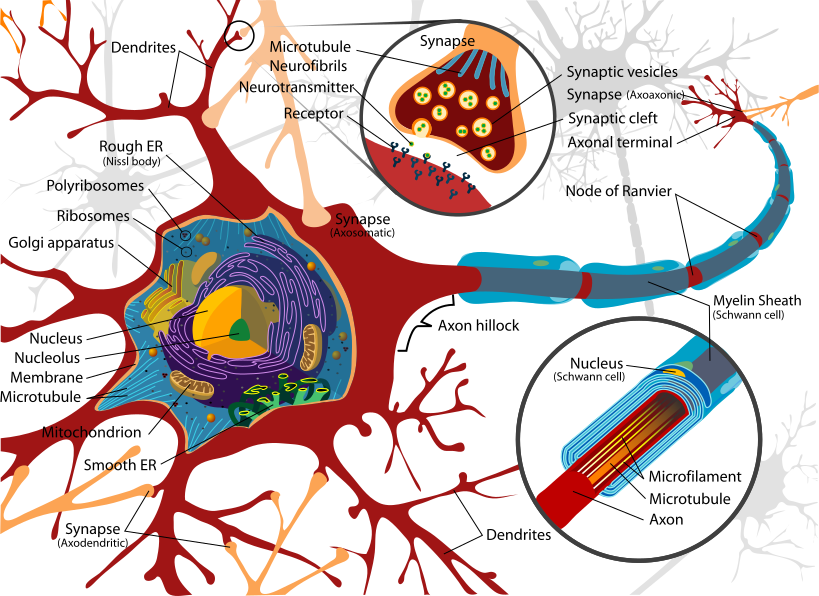
Structure of a neuron. Image: LadyofHats (Mariana Ruiz), Public Domain, via Wikimedia Commons.
Easy - 25 questions
Q1.
Along with dendrites and the cell body (cyton), the third main part of a neuron is the:
- A Axon
- B Nephron
- C Sarcomere
- D Nucleoid
Show answer & explanation →
Q2.
The junction between a motor neuron and the muscle fibre it supplies is the:
- A Synaptic cleft
- B Neuromuscular junction
- C Node of Ranvier
- D Simple reflex arc
Show answer & explanation →
Q3.
The number of pairs of cranial nerves in humans is:
- A Ten pairs
- B Thirty-one pairs
- C Twelve pairs
- D Eight pairs
Show answer & explanation →
Q5.
The three protective membranes covering the brain and spinal cord are the:
- A Meninges
- B Neurons
- C Nephrons
- D Tendons
Show answer & explanation →
Q7.
The axon transmits impulses:
- A Toward the cell body
- B Away from the cell body
- C In both directions
- D Only to other neurons
Show answer & explanation →
Q8.
Myelin sheath is formed by:
- A Astrocytes, which regulate the blood-brain barrier
- B Schwann cells (in PNS) alone, with no CNS counterpart
- C Neurons themselves, by folding their own membrane
- D Oligodendrocytes (in CNS) or Schwann cells (in PNS)
Show answer & explanation →
Q9.
A reflex arc involves:
- A The brain alone, processing input before any response
- B Spinal cord (and sometimes brain) without conscious thought
- C Conscious decision-making in the cerebral cortex
- D Only motor neurons, with no sensory input required
Show answer & explanation →
Q11.
The cerebellum controls:
- A Hunger and thirst
- B Breathing and heart rate
- C Balance and coordination
- D Vision and hearing only
Show answer & explanation →
Q12.
Synapse is the:
- A Cell body of a neuron
- B Junction between two neurons
- C Type of brain cell
- D Part of spinal cord
Show answer & explanation →
Q14.
Acetylcholine and noradrenaline are examples of:
- A Hormones, secreted into the bloodstream by glands
- B Enzymes, which catalyze specific biochemical reactions
- C Neurotransmitters
- D Vitamins, obtained only through dietary intake
Show answer & explanation →
Q15.
The medulla oblongata controls:
- A Voluntary movement initiated by the motor cortex
- B Learning and memory consolidation in the hippocampus
- C Heartbeat and breathing (vital centers)
- D Balance and posture via the cerebellum
Show answer & explanation →
Q16.
Sensory neurons carry signals from:
- A Brain to muscles
- B Muscles to brain
- C Sense organs to CNS
- D CNS to sense organs
Show answer & explanation →
Q17.
Motor neurons carry signals from:
- A CNS to muscles/glands (effectors)
- B Muscles directly back to the brain for processing
- C Sensory organs toward the brain for interpretation
- D Signals confined only within the spinal cord itself
Show answer & explanation →
Q18.
The autonomic nervous system controls:
- A Voluntary muscle movement via motor neurons
- B Involuntary body functions (heart, digestion)
- C Conscious thought processed in the cerebrum
- D Only the eyes and ears through cranial nerves
Show answer & explanation →
Q19.
Sympathetic nervous system is activated during:
- A Sleep
- B Digestion after a meal
- C Fight-or-flight response
- D Rest and recovery
Show answer & explanation →
Q20.
Parasympathetic nervous system is active during:
- A Fight-or-flight responses during acute danger
- B Sudden emergency responses to perceived threats
- C Rest and digest (calms the body)
- D Extreme physical exercise and exertion
Show answer & explanation →
Q21.
Knee-jerk reflex is an example of:
- A A conditioned reflex learned through repeated practice
- B Unconditioned (inborn) spinal reflex
- C A response primarily mediated through higher brain centers
- D Behavior shaped mainly through repeated learning experience
Show answer & explanation →
Q22.
The hypothalamus controls:
- A Balance and fine motor coordination of all skeletal muscle movement
- B Vital breathing and heart rate functions through the brainstem and medulla
- C Homeostasis, hunger, thirst, body temperature, and pituitary hormones
- D All voluntary movement initiation via the cerebral motor cortex
Show answer & explanation →
Q23.
The spinal cord is protected by:
- A Meninges and vertebral column
- B Skull bone alone, with no other covering
- C The brain, positioned directly above it
- D Rib cage surrounding the thoracic cavity
Show answer & explanation →
Q24.
Depolarization of a neuron occurs when:
- A K+ rushes into the cell
- B Na+ rushes into the cell
- C Cl- rushes out
- D K+ rushes out
Show answer & explanation →
Q25.
Brain and spinal cord together form the:
- A Peripheral nervous system
- B Central nervous system
- C Autonomic nervous system
- D Somatic nervous system
Show answer & explanation →
Medium - 25 questions
Q26.
The number of pairs of spinal nerves in humans is:
- A Twelve pairs
- B Thirty-one pairs
- C Ten pairs
- D Forty pairs
Show answer & explanation →
Q28.
The sudden inflow of which ion causes depolarisation of a neuron?
- A Potassium (K<sup>+</sup>)
- B Calcium (Ca<sup>2+</sup>)
- C Chloride (Cl<sup>-</sup>)
- D Sodium (Na<sup>+</sup>)
Show answer & explanation →
Q29.
For every 2 potassium ions it pumps in, the sodium-potassium pump pumps out:
- A Three sodium ions
- B Two sodium ions
- C One sodium ion
- D No sodium ions
Show answer & explanation →
Q30.
The forebrain, midbrain and hindbrain are the three main divisions of the:
- A Spinal cord
- B Brain
- C Reflex arc
- D Sense organ
Show answer & explanation →
Q31.
Saltatory conduction occurs in:
- A Unmyelinated neurons that conduct impulses continuously
- B Myelinated neurons (impulse jumps between nodes of Ranvier)
- C Mainly sensory neurons carrying afferent signals to the CNS
- D Mainly motor neurons carrying efferent signals to muscles
Show answer & explanation →
Q32.
Nodes of Ranvier are gaps in the:
- A Axon itself, where the cytoplasm is interrupted
- B Myelin sheath exposing the axon membrane
- C Cell body, where the nucleus and organelles are located
- D Dendrites, where incoming signals are received
Show answer & explanation →
Q33.
The all-or-nothing principle of nerve impulses means:
- A All neurons throughout the body fire simultaneously together
- B An impulse is either at full strength or does not occur at all
- C Impulses can vary continuously in strength depending on stimulus size
- D Only motor neurons obey this principle, unlike sensory neurons
Show answer & explanation →
Q34.
Repolarization of the axon during action potential involves:
- A Na+ flowing in, depolarizing the membrane further
- B K+ flowing out restoring negative inside
- C Ca<sup>2+</sup> entering through voltage-gated channels at the terminal
- D Cl- flowing in, hyperpolarizing the resting membrane
Show answer & explanation →
Q35.
Inhibitory postsynaptic potentials (IPSPs) involve:
- A Na+ influx causing rapid membrane depolarization
- B Cl- influx or K+ efflux causing hyperpolarization
- C Mainly acetylcholine release at the synaptic cleft
- D Neurotransmitter uptake occurring back from the synapse
Show answer & explanation →
Q36.
The blood-brain barrier is formed by:
- A Neurons themselves, by forming an insulating layer around capillaries
- B Tight junctions between brain capillary endothelial cells (and astrocytes)
- C The bony skull enclosing and protecting the brain
- D Cerebrospinal fluid alone, cushioning the brain tissue
Show answer & explanation →
Q37.
Long-term potentiation (LTP) is associated with:
- A Forgetting, through gradual weakening of synaptic connections over time under usual circumstances
- B The cellular mechanism of memory formation (strengthening of synaptic connections)
- C Relaxation of skeletal muscle following a period of sustained contraction according to most researchers
- D Release of hormones specifically from the anterior pituitary gland in the majority of cases studied
Show answer & explanation →
Q38.
Cerebrospinal fluid (CSF) is produced in:
- A The cerebral cortex, by neurons lining its outer surface
- B Choroid plexus inside the ventricles
- C The cerebellum, through its dense layer of granule cells
- D The spinal cord, by glial cells lining the central canal
Show answer & explanation →
Q39.
Dopamine deficiency is associated with which disease?
- A Alzheimer disease
- B Parkinson disease
- C Multiple sclerosis
- D Myasthenia gravis
Show answer & explanation →
Q40.
The sympathetic nervous system uses which neurotransmitter at target organs?
- A Acetylcholine, released at the neuromuscular junction
- B Noradrenaline (norepinephrine)
- C Dopamine, acting mainly within reward pathways of the brain
- D Serotonin, regulating mood within central synapses
Show answer & explanation →
Q41.
GABA is the main _____ neurotransmitter in the CNS:
- A Excitatory
- B Inhibitory
- C Neither excitatory nor inhibitory
- D Only in peripheral nervous system
Show answer & explanation →
Q42.
The corpus callosum connects:
- A Brain to spinal cord via the brainstem pathway
- B Left and right cerebral hemispheres
- C Cerebrum to cerebellum through the pons region
- D Thalamus to hypothalamus within the diencephalon
Show answer & explanation →
Q43.
Myasthenia gravis is caused by:
- A Dopamine deficiency in the substantia nigra region of the midbrain
- B Autoimmune attack on acetylcholine receptors at neuromuscular junction
- C Progressive loss of the myelin sheath surrounding central nervous system axons
- D Excess GABA accumulation occurring at inhibitory central nervous synapses
Show answer & explanation →
Q44.
Broca's area in the left frontal lobe controls:
- A Vision processing, relayed from the occipital lobe
- B Speech production (motor speech)
- C Hearing, processed primarily in the temporal lobe
- D Memory only, consolidated in the hippocampus
Show answer & explanation →
Q45.
Spinal cord injury above C<sub>4</sub> affects:
- A Mainly leg movement, leaving the arms and trunk unaffected
- B Breathing and all limbs (may require ventilator)
- C Mainly arm movement, sparing the lower limbs largely
- D Mainly bladder control, with limb function largely preserved
Show answer & explanation →
Q46.
Glutamate is the main _____ neurotransmitter in the CNS:
- A Inhibitory, hyperpolarizing postsynaptic neurons via GABA receptors
- B Excitatory (NMDA, AMPA receptor activation)
- C Modulatory mainly, acting through slow second-messenger pathways
- D Peripheral mainly, restricted to neuromuscular junctions
Show answer & explanation →
Q47.
Pavlov's conditioning is an example of:
- A Innate behavior present from birth, occurring without any prior learning involved
- B Classical conditioning (associating a neutral stimulus with an unconditioned stimulus)
- C Habituation, a decreased response that develops to a repeated harmless stimulus
- D Operant conditioning, where behavior is gradually shaped by reward or punishment
Show answer & explanation →
Q48.
The thalamus acts as:
- A A long-term memory storage center within the limbic system
- B Relay station for sensory information to cerebral cortex
- C A motor coordination center fine-tuning voluntary movement
- D A hormone production center regulating the endocrine system
Show answer & explanation →
Q49.
The term for the minimum voltage that must be reached to trigger an action potential is:
- A Resting potential
- B Threshold potential
- C Graded potential
- D Absolute refractory period
Show answer & explanation →
Q50.
Multiple sclerosis results from:
- A Dopamine deficiency in midbrain dopaminergic neurons
- B Autoimmune destruction of myelin sheath in CNS
- C Progressive degeneration and loss of spinal motor neurons
- D Overproduction of acetylcholine at the neuromuscular junction
Show answer & explanation →
Hard - 25 questions
Q51.
Neurotransmitter release from the axon terminal is triggered by the inflow of:
- A Sodium ions
- B Potassium ions
- C Calcium ions
- D Chloride ions
Show answer & explanation →
Q52.
The enzyme that breaks down acetylcholine in the synaptic cleft to end the signal is:
- A Salivary amylase
- B Gastric pepsin
- C Pancreatic lipase
- D Acetylcholinesterase
Show answer & explanation →
Q53.
The white matter of the central nervous system looks white because of the presence of:
- A Myelin sheaths
- B Grey neuron bodies
- C Many blood vessels
- D Cerebrospinal fluid
Show answer & explanation →
Q54.
The receptors that detect chemical stimuli, as in smell and taste, are the:
- A Photoreceptors
- B Chemoreceptors
- C Mechanoreceptors
- D Thermoreceptors
Show answer & explanation →
Q55.
A quick reflex such as withdrawing the hand from a pin is controlled mainly by the:
- A Cerebrum
- B Cerebellum
- C Spinal cord
- D Thalamus
Show answer & explanation →
Q56.
NMDA receptors are special among ionotropic receptors because:
- A They respond mainly to GABA, the principal inhibitory neurotransmitter found within the central nervous system as generally observed
- B They require both ligand binding (glutamate) AND membrane depolarization to remove Mg<sup>2+</sup> block (coincidence detectors for LTP)
- C They are found mainly within the peripheral nervous system and rarely occur centrally in the brain in typical laboratory settings
- D They signal mainly through a slow G-protein coupled second-messenger cascade rather than a channel directly under usual circumstances
Show answer & explanation →
Q57.
Calcium/calmodulin-dependent kinase II (CaMKII) is important in LTP because:
- A It is reported to inhibit presynaptic glutamate release, thereby reducing the overall strength of synaptic transmission at that particular synapse according to most researchers
- B It is persistently activated after brief Ca<sup>2+</sup> entry (via NMDA) and phosphorylates AMPA receptors, increasing their conductance, and recruits more AMPA to synapse
- C It is said to enzymatically degrade neurotransmitter molecules that remain within the synaptic cleft after their initial release event in the majority of cases studied
- D It is reported to physically form the entire structural scaffold of the postsynaptic density largely on its own, mostly unaided as widely reported in standard practice
Show answer & explanation →
Q58.
The absolute refractory period of a neuron is due to:
- A Potassium channels remaining continuously open, thereby preventing any further membrane depolarization event under most conditions encountered
- B Na+ channels being inactivated (h gate closed) -- no matter how strong the stimulus, no action potential can be generated
- C Continuous chloride efflux that hyperpolarizes the neuronal membrane indefinitely without any recovery period as frequently observed in practice
- D A temporary, complete absence of ATP needed to power the sodium-potassium exchange pump mechanism in many documented cases
Show answer & explanation →
Q59.
Quantal neurotransmitter release at the synapse means:
- A Transmitter release scales smoothly and continuously in direct proportion to action potential firing frequency according to conventional understanding
- B Transmitter is released in discrete, all-or-nothing packages (quanta = synaptic vesicles) each containing ~5,000 molecules
- C The total amount of transmitter released varies continuously along an unbroken smooth gradient curve in routine practice
- D Exactly one single transmitter molecule is released from the presynaptic terminal at any given time overall in most cases
Show answer & explanation →
Q60.
The postsynaptic density (PSD) at excitatory synapses contains:
- A Voltage-gated Na+ channels that are mainly responsible for the rising phase of the action potential itself under typical conditions
- B Scaffold proteins (PSD-95), AMPA and NMDA receptors, signaling enzymes (CaMKII) -- organizing the postsynaptic signaling complex
- C Mainly nicotinic acetylcholine receptors, with very few glutamate receptors present overall according to standard textbooks
- D Mainly inhibitory GABA-A receptors that are clustered tightly at the postsynaptic membrane surface region in general practice
Show answer & explanation →
Q61.
Vesicle docking and fusion at the presynaptic terminal requires:
- A Calcium ions alone, requiring little additional dedicated protein fusion machinery at the presynaptic membrane region as frequently described
- B SNARE proteins (synaptobrevin on vesicle, syntaxin and SNAP-25 on plasma membrane) forming a complex when Ca<sup>2+</sup> triggers synaptotagmin
- C ATP hydrolysis alone, occurring largely independent of any incoming calcium signal at the synaptic terminal in most textbook accounts
- D Calmodulin protein acting largely alone, without much involvement of a SNARE protein complex at the membrane during normal conditions
Show answer & explanation →
Q62.
Tetrodotoxin (TTX) blocks action potentials by:
- A Blocking voltage-gated K+ channels, thereby preventing normal repolarization of the cell membrane afterward as generally observed in typical laboratory settings
- B Specifically blocking voltage-gated Na+ channels from outside, preventing depolarization (used in research and is the puffer fish toxin)
- C Inhibiting voltage-gated Ca<sup>2+</sup> channels located at the presynaptic nerve terminal region specifically under usual circumstances according to most researchers
- D Blocking postsynaptic NMDA receptors, thereby preventing glutamate-induced membrane depolarization events in the majority of cases studied
Show answer & explanation →
Q63.
Benzodiazepines (like diazepam) act by:
- A Directly and competitively blocking GABA-A receptors, thereby reducing inhibitory chloride conductance levels as widely reported
- B Acting as positive allosteric modulators of GABA-A receptors, increasing frequency of Cl- channel opening in response to GABA
- C Mimicking the action of glutamate at excitatory NMDA and AMPA receptor binding sites directly in standard practice under most conditions encountered
- D Blocking voltage-gated sodium channels distributed along the entire length of the axon membrane as frequently observed in practice
Show answer & explanation →
Q64.
Neurogenesis in adult brain primarily occurs in:
- A All regions of the adult brain equally, with little regional specificity
- B Subventricular zone (SVZ) and subgranular zone of hippocampal dentate gyrus
- C Mainly within the granule cell layer of the cerebellum
- D Mainly within nuclei located in the brainstem
Show answer & explanation →
Q65.
Synaptic scaling (homeostatic plasticity) occurs when:
- A Individual synapses are selectively and permanently strengthened through long-term potentiation alone repeatedly in many documented cases
- B Neurons globally scale all synaptic strengths up or down to maintain stable activity levels (compensating for prolonged changes in activity)
- C Mainly inhibitory GABAergic synapses undergo any measurable change in synaptic strength over time according to conventional understanding
- D Synapses are permanently and irreversibly eliminated, with little compensatory scaling response occurring afterward in routine practice
Show answer & explanation →
Q66.
The cerebellum predicts and corrects motor movements using:
- A Direct motor commands transmitted straight from the cerebellum to skeletal muscle fibres, largely bypassing the spinal cord pathway overall
- B Internal forward models: comparing efference copy (predicted movement) with sensory feedback to compute error signals, adjusting motor output
- C Long-term storage of most movement sequence the organism has ever previously learned throughout its entire lifetime span in most cases under typical conditions
- D Visual input alone, largely without much use of any proprioceptive or vestibular motor feedback signal present according to standard textbooks
Show answer & explanation →
Q67.
The Hodgkin-Huxley model of the action potential uses which equation?
- A Mainly a simple, fixed-threshold equation that includes few voltage-dependent gating variables present in general practice
- B Differential equations with m, h (Na+ channel gating) and n (K+ channel gating) variables derived from voltage-clamp experiments
- C Ohm's law alone, relating membrane current directly to voltage and a fixed resistance term value as frequently described in most textbook accounts
- D The Nernst equation alone, describing mainly the equilibrium potential of a single permeant ion species during normal conditions
Show answer & explanation →
Q68.
BDNF (brain-derived neurotrophic factor) promotes neuronal survival and LTP by:
- A Blocking glutamate receptors largely, thereby reducing overall excitatory synaptic transmission activity as generally observed in typical laboratory settings
- B Activating TrkB receptors, stimulating MAPK and PI3K signaling, promoting survival gene expression, and modulating synaptic protein synthesis
- C Blocking apoptosis through a single, narrowly defined caspase-dependent signaling pathway mainly under usual circumstances according to most researchers
- D Inactivating synapses that are determined to be no longer needed within current neural circuit pathways in the majority of cases studied
Show answer & explanation →
Q69.
The dorsal root ganglion contains:
- A Cell bodies of motor neurons that directly control the contraction of skeletal muscle fibres themselves as widely reported
- B Cell bodies of primary sensory (afferent) neurons that transmit pain, temperature, and touch to the spinal cord
- C Cell bodies of autonomic neurons that regulate involuntary visceral organ function broadly in standard practice
- D Mainly the cell bodies of interneurons confined largely within the grey matter of the spinal cord under most conditions encountered
Show answer & explanation →
Q70.
Pain perception (nociception) involves which key receptor?
- A AMPA receptors, which mainly mediate fast excitatory transmission at central glutamatergic synapses broadly as frequently observed in practice
- B TRPV1 (transient receptor potential vanilloid 1) channels activated by heat (>43C), acid, and capsaicin, initiating pain signals
- C Mainly NMDA receptors, which generally require coincident membrane depolarization in order to open in many documented cases
- D Voltage-gated potassium channels that generally repolarize the neuronal membrane after each firing event according to conventional understanding
Show answer & explanation →
Q71.
Demyelinating disease slows nerve conduction because:
- A It directly destroys the entire neuron cell body along with its nucleus and cellular organelles in routine practice
- B Loss of myelin sheath converts saltatory conduction to slow continuous conduction; threshold may not be reached at nodes
- C It pharmacologically blocks voltage-gated sodium channels distributed along the entire axon membrane overall in most cases
- D It substantially increases resting membrane permeability specifically to potassium ions present under typical conditions
Show answer & explanation →
Q72.
The enteric nervous system is called the second brain because:
- A It is sometimes mistakenly thought to control all conscious thought processes largely independent of the cerebral cortex itself
- B It contains ~500 million neurons and can control digestion independently of CNS (two nerve plexuses: myenteric and submucosal)
- C It is reported to store the majority of an organism's long-term declarative memories permanently
- D It is simply located anatomically very close in proximity to the brain structure itself
Show answer & explanation →
Q73.
Mirror neurons, first discovered in macaques, fire when:
- A An animal generally detects a sudden change in ambient light intensity within its visual field of view according to standard textbooks
- B An animal performs an action AND when it observes another performing the same action (proposed role in imitation, empathy)
- C Mainly during slow-wave or REM sleep stages, rarely during ordinary waking activity periods in general practice as frequently described
- D Mainly in direct response to acute nociceptive pain stimulation applied to the skin surface in most textbook accounts
Show answer & explanation →
Q74.
In pain wind-up, repeated C-fiber stimulation causes:
- A A steady, progressive decrease in perceived pain intensity over repeated identical stimulation events during normal conditions
- B Progressive increase in dorsal horn neuron response due to NMDA receptor activation and substance P release (central sensitization)
- C Little measurable change in dorsal horn neuron firing rate observed over an extended period of time as generally observed in typical laboratory settings
- D Sensitization restricted mainly to peripheral nociceptor nerve terminals, rarely reaching the spinal cord region under usual circumstances
Show answer & explanation →
Q75.
The junction across which a nerve impulse passes from one neuron to the next is the:
- A synapse
- B axon
- C dendrite
- D myelin node
Show answer & explanation →